





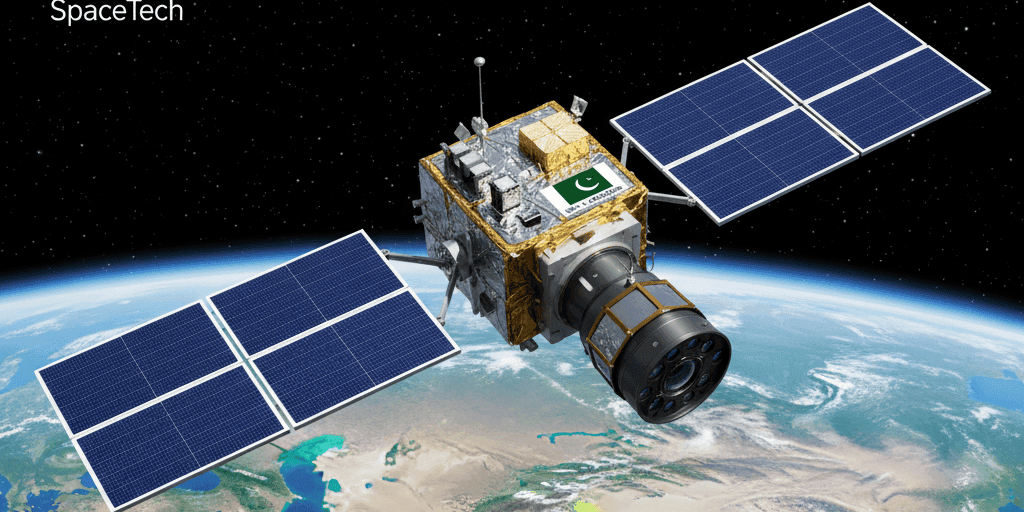
Pakistan proudly launched its first hyperspectral satellite HS-1, a major milestone in the nation’s space and technology sector. SUPARCO conducted the launch from its Karachi facility, showcasing Pakistan’s growing expertise in space technology.
Advanced Technology for Earth Observation
The Pakistan hyperspectral satellite HS-1 captures high-resolution spectral data across multiple bands. This allows experts to analyze Earth’s surface in detail. The satellite will transform agriculture, urban planning, environmental monitoring, and disaster management. It gives researchers precise data to make informed decisions.
Applications in Agriculture and Disaster Management
Officials highlight that the hyperspectral satellite HS-1 supports crop monitoring, water resource management, and early detection of natural disasters. These capabilities help Pakistan achieve sustainable development goals and improve national resilience.
Detailed Surface Analysis Capabilities
Unlike conventional satellites, HS-1 detects subtle changes in vegetation, soil, and urban infrastructure. Scientists can now study surface composition with greater accuracy. The Pakistan hyperspectral satellite opens new research possibilities in these critical areas.
National and International Impact
The HS-1 launch positions Pakistan among countries with hyperspectral satellite capabilities. SUPARCO officials state, “The Pakistan hyperspectral satellite HS-1 reflects our technological progress and national pride.” The satellite also offers international collaboration opportunities, sharing valuable data with global research institutions.
Read more: SUPARCO Successfully Launches Pakistan’s First Hyperspectral Satellite
Moving Forward with Space Innovation
With HS-1 in orbit, Pakistan actively integrates advanced space technology into practical applications. The Pakistan hyperspectral satellite will provide vital data for sustainable development, scientific research, and disaster mitigation nationwide.