





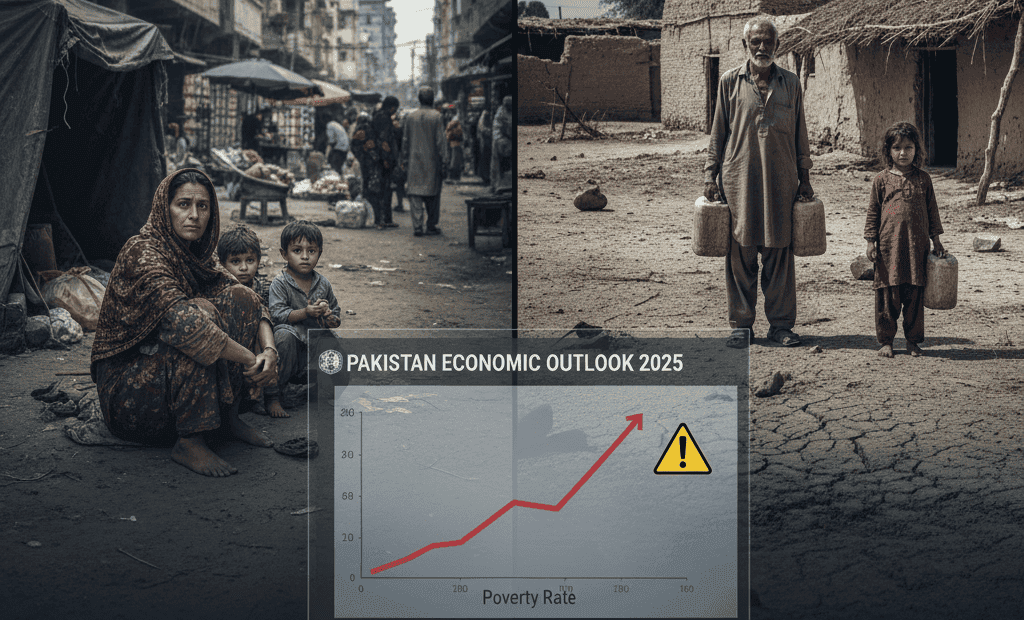
Pakistan Poverty 2025 | 5 Key Reasons World Bank Warns of Rising Crisis
Pakistan Poverty 2025 has become a major concern as the World Bank warns that economic shocks, weak reforms, and climate disasters are forcing millions of people back below the poverty line. The report stresses that progress made in earlier years is now at risk of being lost unless urgent action is taken.
Why Pakistan Poverty 2025 is Rising Again
For several years, Pakistan had been reducing poverty through remittances, agriculture, and social support programs. But in 2025, this progress is reversing. The World Bank highlights five main reasons for the Pakistan Poverty 2025 crisis:
- High Inflation Rising prices of food, fuel, and electricity have made daily life unaffordable.
- Slow Job Creation With industries struggling and investments slowing, job opportunities are shrinking.
- Weak Reforms Structural changes that could stabilize the economy have been delayed.
- Climate Disasters Floods in Punjab and Sindh destroyed crops, factories, and homes.
- External Pressures Heavy debt and dependency on imports have made Pakistan more vulnerable.
These setbacks are pushing millions of households into financial hardship.
Human Side of Pakistan Poverty 2025
Behind the numbers are real families facing crisis. Farmers in Sindh who lost cotton crops are trapped in debt. Factory workers in Punjab have lost jobs as production slowed. For them, Pakistan Poverty 2025 is not a report it is daily hunger, debt, and uncertainty.
In Karachi and Lahore, rising utility bills and transport costs are crushing the working class. Even middle-income families are struggling to maintain basic standards of living.
World Bank’s Recommendations on Pakistan Poverty 2025
The World Bank has urged Pakistan to act quickly. Its recommendations include:
- Expand Social Safety Nets like cash transfers to protect vulnerable families.
- Introduce Stronger Economic Reforms to attract investment and boost productivity.
- Build Climate Resilience to prepare for floods and droughts.
- Create Jobs in agriculture, manufacturing, and services.
Without these steps, Pakistan Poverty 2025 could deepen, affecting millions more.
👉 World Bank Report on Pakistan
Government’s Response
Officials in Islamabad point to initiatives like the Benazir Income Support Programme (BISP), electricity subsidies, and investment talks with international partners. However, critics argue these are short term solutions and do not address the deeper problems behind Pakistan Poverty 2025.
Analysts stress that tackling corruption, improving tax collection, and reducing dependency on external loans are essential for sustainable growth.
Global Context of Poverty Crisis
Pakistan is not alone. Many developing countries face high inflation, climate disasters, and debt burdens. But Pakistan’s situation is more complex due to political instability and reliance on imports.
Still, the World Bank believes Pakistan has potential. With its young population and strong agricultural base, it can recover if bold reforms are made.
Looking Ahead
The warning on Pakistan Poverty 2025 is more than statistics it is a wake-up call. If policymakers, businesses, and communities act together, Pakistan can reverse this trend.
Immediate relief is necessary, but long term reforms in education, healthcare, energy, and governance are the real solution.
Conclusion
The World Bank’s alert on Pakistan Poverty 2025 shows the urgent need for action. Inflation, weak reforms, and climate disasters are pushing millions into hardship. But with strong policies, investment in people, and resilience against climate change, Pakistan can turn the tide.
This crisis is not permanent. The outcome of Pakistan Poverty 2025 will depend on the choices leaders and communities make today.