

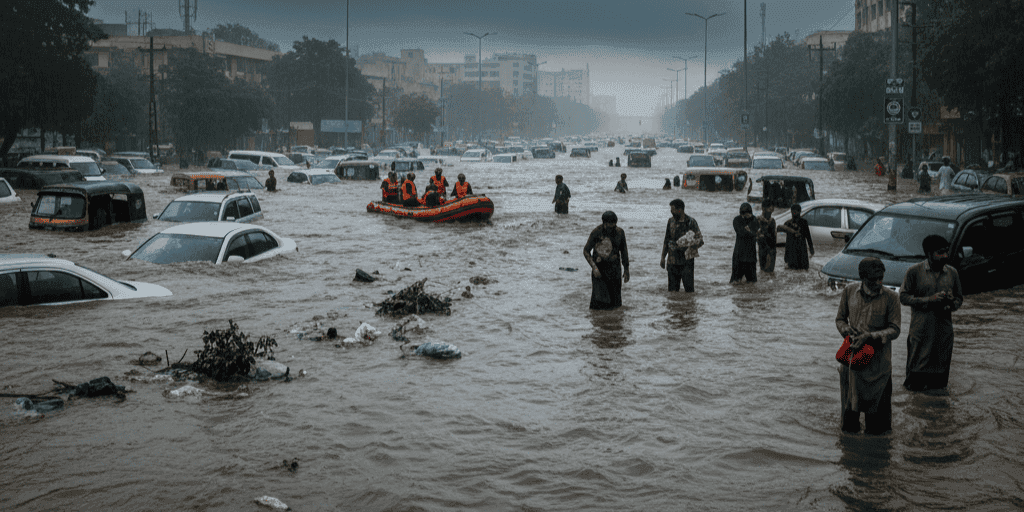
Karachi, Pakistan’s financial hub and most populated city, has once again been left devastated by torrential monsoon rains. Hours of continuous downpour flooded low-lying neighborhoods, paralyzed traffic, and caused multiple casualties, exposing the city’s fragile urban infrastructure. Dawn News Report
Details of the Rainfall and Flooding
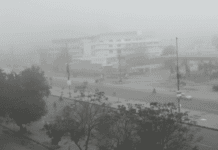
The rains began late at night and continued for nearly six hours, overwhelming Karachi’s already strained drainage system. Within hours, water accumulated in major residential and commercial areas, leaving thousands stranded.
Areas worst affected included Malir, Liaquatabad, Korangi, Baldia Town, Shah Faisal Colony, Surjani Town, Model Colony, and North Nazimabad. Underpasses and main arteries such as Sharae Faisal, University Road, and MA Jinnah Road were submerged, halting vehicular movement.
Eyewitnesses described scenes of cars floating, motorcycles abandoned, and residents wading through waist-deep water to reach safety.
Casualties and Property Losses
According to local media, at least eight people died in rain-related incidents, including electrocution and wall collapses. Rescue teams later confirmed that the death toll could be higher as search operations continued. Geo News Coverage
Dozens of houses in low-lying settlements were inundated, while small businesses reported significant losses due to water damage. Citizens complained that power cuts lasting up to 12 hours left them helpless as pumps and communication systems failed.
Public Outrage and Daily Hardships
The chaos caused by the downpour brought life in Karachi to a standstill. Public transport collapsed as buses, rickshaws, and ride-hailing services went offline. Thousands of office workers were unable to commute, while students were forced to stay home as schools closed.
Outraged citizens took to social media to share photos and videos, showing submerged roads and stranded families. Hashtags like #KarachiRain and #KarachiFloods trended nationwide, with many criticizing the authorities for failing to prepare despite repeated warnings.
Government and Emergency Response
Sindh government officials acknowledged the scale of the crisis but argued that the intensity of rainfall was “unprecedented.” The Chief Minister of Sindh ordered emergency teams to carry out drainage operations and directed police and Rangers to assist stranded residents.
The Karachi Metropolitan Corporation deployed water pumps in key areas, but critics said the response was slow and poorly coordinated. Citizens complained that relief efforts reached them hours after the rain had stopped, leaving many to fend for themselves.
Rescue and Relief Efforts
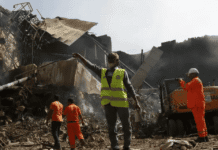
Edhi Foundation, Chhipa, and other volunteer organizations were among the first to arrive in flooded neighborhoods. Rescue boats were deployed in Malir and Korangi to evacuate residents trapped in submerged homes.
Emergency hotlines received thousands of calls, mostly reporting electrocution hazards, trapped vehicles, and stranded families. Despite limited resources, volunteers provided food, blankets, and first aid at temporary shelters.
Historical Context | Karachi’s Flooding Problem
Urban flooding is not new to Karachi. Almost every monsoon season, the city suffers heavy losses due to outdated drainage systems, encroachments on stormwater drains, and poor urban planning.
Experts argue that unchecked urbanization has left Karachi without natural outlets for rainwater. Drains are often clogged with garbage, reducing their capacity to handle even moderate rainfall. This year’s disaster is being seen as another painful reminder of structural negligence.
Health and Environmental Concerns
Floodwaters mixed with sewage created serious health risks. Doctors warned of potential outbreaks of waterborne diseases such as cholera, dengue, and gastroenteritis. Contaminated water supplies in several neighborhoods increased fears of a post-flood health crisis. WHO Pakistan Advisory
The Meteorological Department has forecast more rainfall in the coming days, raising concerns about a repeat of Monday’s chaos. Officials urged citizens to remain indoors, avoid unnecessary travel, and stay away from electric poles and open drains.
Public Demands and Accountability
Civil society organizations and local activists are demanding accountability from municipal authorities. They argue that despite billions spent on development projects, Karachi continues to sink after every spell of rain.
Calls for long-term infrastructure reforms, including the expansion of drainage channels and stricter waste management, are growing louder. Experts emphasize that without structural change, the cycle of flooding and loss of life will continue each year.
Conclusion
The torrential rains in Karachi have once again highlighted the city’s vulnerability to climate change, poor governance, and crumbling infrastructure. With at least eight lives lost and thousands displaced, the incident has sparked anger and urgent calls for reform.
As the city braces for more rain, residents demand not just short-term relief but long-term solutions to prevent future disasters. Until those demands are met, Karachi will continue to suffer the deadly consequences of every monsoon season.