




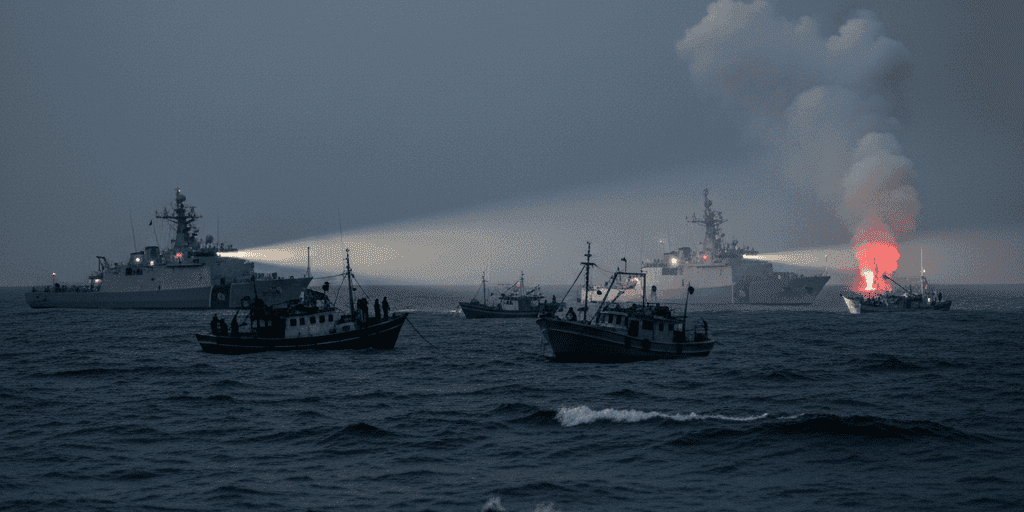
The Gaza Flotilla reports unlit boats approaching its vessels during a recent voyage, raising immediate concerns about maritime safety and regional security. The flotilla, known for carrying humanitarian supplies and drawing international attention to the blockade on Gaza, announced that multiple small unlit boats were detected in close proximity to its ships. This prompted security teams to take urgent measures to safeguard the crew, passengers, and cargo on board.
Unlit Boats Raise Maritime Safety Concerns
According to flotilla representatives, the presence of unlit boats in international waters posed a direct threat. Ships operating without lights at night risk collisions and can be perceived as hostile in conflict-prone zones. Security experts note that unlit vessels are often associated with smuggling, surveillance, or potential military activity. The Gaza Flotilla’s report highlights the persistent dangers faced by aid groups navigating these waters.
The incident occurred while the flotilla was en route to deliver humanitarian assistance. Witnesses described how the unidentified boats appeared suddenly, forcing the crew to adopt defensive measures. Although no direct confrontation took place, the episode left passengers anxious and raised broader questions about maritime monitoring and accountability.
Regional Tensions and Historical Context
The Gaza Flotilla has long been a subject of controversy due to its repeated attempts to challenge the blockade imposed on Gaza. Previous flotilla missions have faced interception, sometimes leading to international disputes and diplomatic fallout. The latest report of unlit boats adds another layer of complexity to an already volatile maritime environment.
Experts argue that such incidents underscore the urgent need for stronger maritime laws and enforcement mechanisms. International organizations have previously urged regional powers to respect humanitarian missions and ensure safe passage for non-combat vessels.
For further reference, the United Nations Convention on the Law of the Sea (UNCLOS) provides clear regulations about safe navigation and the use of lights on vessels. Ships that fail to comply not only risk accidents but also create insecurity in international waters. Read more at UN.org.
Security Measures Taken by the Flotilla
In response to the suspicious boats, flotilla security teams activated emergency protocols. Measures included:
Alerting crew members to remain inside protected areas.
Increasing lookout rotations to monitor the waters continuously.
Preparing distress signals in case the situation escalated.
Coordinating with maritime communication channels to log the event.
The flotilla later confirmed that the unlit boats eventually retreated, but not before causing significant alarm. While no physical harm occurred, the heightened sense of vulnerability highlighted the risks aid missions continue to face.
International Reactions
Human rights groups and maritime observers have expressed concern over the event. Several organizations called for transparency, urging authorities to investigate the identity and intentions of the unlit boats. They argue that such incidents undermine humanitarian operations and increase the risk of conflict escalation at sea.
Political analysts also point out that the flotilla’s experience could influence international debate on the Gaza blockade. Past flotilla incidents have sparked widespread media coverage, sometimes pressuring governments to respond diplomatically.
Calls for Enhanced Maritime Security
The report of unlit boats has renewed calls for enhanced maritime security in contested waters. Analysts recommend:
Strengthening satellite surveillance to track unidentified vessels.
Increasing cooperation between humanitarian organizations and maritime safety agencies.
Creating internationally monitored safe corridors for aid deliveries.
Encouraging transparency in regional naval operations.
The episode serves as a reminder that maritime missions in politically sensitive zones require constant vigilance. Without international oversight, the risk of accidents, miscommunication, or deliberate attacks remains high.
Humanitarian Perspective
Despite the risks, flotilla organizers insist that their mission remains unchanged: to deliver aid and highlight humanitarian challenges in Gaza. They argue that intimidation tactics, such as the sudden appearance of unlit boats, will not deter them from their objectives.
Passengers aboard the flotilla reported feeling shaken but resilient. “We understood the dangers when we joined this mission,” one passenger said. “But we also know that silence in the face of injustice is not an option.”
Conclusion
The Gaza Flotilla reports unlit boats approaching its vessels, prompting swift security measures and raising global concern over maritime safety. While the incident ended without direct confrontation, it highlights the fragile security environment in international waters surrounding Gaza. Calls for greater transparency, accountability, and protection of humanitarian missions are likely to intensify in the wake of this event.
As regional tensions persist, the incident serves as a stark reminder of the risks faced by humanitarian groups and the urgent need for international action to ensure their safety.