





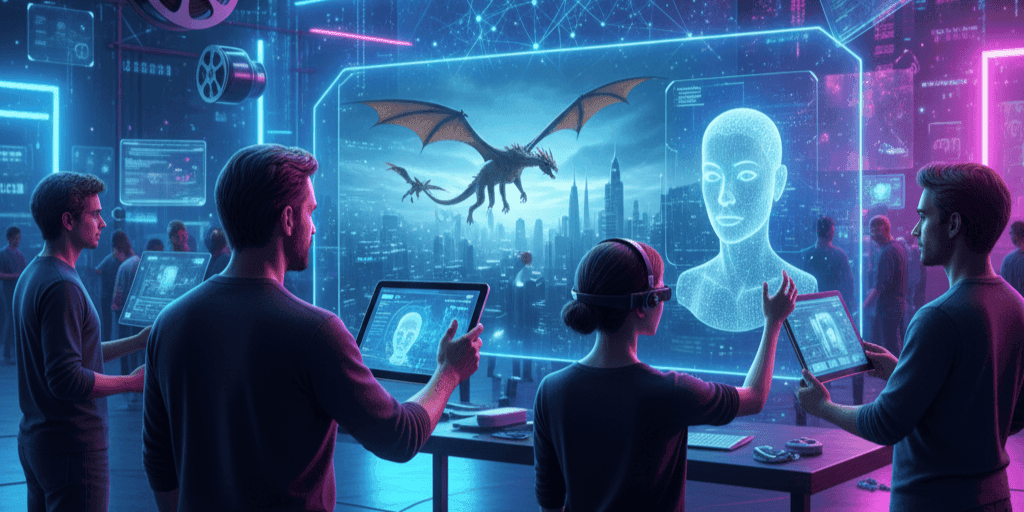
Generative AI in Hollywood Productions Driving a New Era of Filmmaking
Table of Contents
- Introduction
- How Generative AI is Entering Hollywood
- Benefits of Generative AI in Film Productions
- Concerns Raised by Filmmakers and Writers
- Impact on Actors and Visual Effects Teams
- Industry Reactions and Labor Union Responses
- Examples of AI Tools Used in Cinema
- What the Future Holds for Generative AI in Hollywood
- Conclusion
1. Introduction
Generative AI in Hollywood productions is becoming one of the most debated topics in entertainment. From film studios to independent creators, the industry is witnessing a rapid shift in how movies and TV shows are made. While AI-driven technologies are offering exciting new possibilities, they also raise concerns about creativity, originality, and employment in the film industry.
2. How Generative AI is Entering Hollywood
Hollywood studios are experimenting with AI to generate scripts, design visual effects, and even produce digital doubles of actors. According to Variety’s report on AI in Hollywood, major production houses are testing AI-driven tools to cut down production time and costs. This transformation signals that AI will no longer remain in the background but will actively shape the creative process.
3. Benefits of Generative AI in Film Productions
The use of generative AI in Hollywood productions has clear benefits:
- Faster Script Drafts: AI can create story outlines within minutes.
- Enhanced Visual Effects: AI algorithms can generate realistic landscapes and futuristic cityscapes at a fraction of the usual cost.
- Post-Production Efficiency: Editing and dubbing are becoming quicker with AI-powered software.
These innovations promise to help filmmakers achieve more ambitious projects without exceeding budgets.
4. Concerns Raised by Filmmakers and Writers
Despite its potential, generative AI in Hollywood productions is raising ethical and professional concerns. Writers worry that AI-generated scripts may lack emotional depth, while directors fear a loss of human creativity. The Writers Guild of America has openly questioned whether AI could eventually replace human storytellers, which remains a critical debate.
5. Impact on Actors and Visual Effects Teams
Generative AI also affects actors and VFX teams. AI-based digital doubles can recreate actors without needing them on set, raising questions about consent and compensation. Visual effects teams, once in high demand, now face competition from AI systems capable of producing near-realistic graphics in less time.
6. Industry Reactions and Labor Union Responses
Labor unions in Hollywood are taking firm stances. The Screen Actors Guild (SAG-AFTRA) has demanded clear contracts that protect performers from unauthorized AI use. Internal discussions also highlight the need for stronger copyright laws to prevent studios from overusing AI-generated content. Readers can also explore related stories in our Entertainment News section for more insights on how the industry is adapting.
7. Examples of AI Tools Used in Cinema
Several AI tools are already in use:
- Runway Gen-2 for video generation.
- ChatGPT-based assistants for script drafting.
- Deepfake technologies for recreating historical figures.
For example, AI tools were reportedly tested in Marvel productions to accelerate pre-visualization processes.
8. What the Future Holds for Generative AI in Hollywood
The future of generative AI in Hollywood productions depends on how studios, unions, and governments balance creativity with responsibility. Industry experts predict that AI will not completely replace humans but rather serve as a collaborative partner. Filmmakers who embrace AI responsibly may unlock new creative frontiers, while those resisting it may struggle to keep up with technological change.
9. Conclusion
Generative AI in Hollywood productions is reshaping the global entertainment landscape. With benefits like faster workflows and improved effects, AI is becoming an asset. However, the ethical challenges surrounding originality, ownership, and employment cannot be ignored. As the debate continues, one thing is clear: AI is here to stay, and its role in filmmaking will only expand in the coming years.