


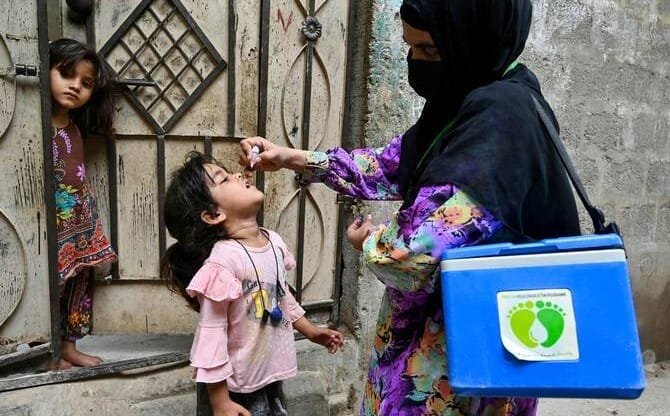
The Pakistan polio cases Sindh 2025 update has raised fresh concerns over the nation’s ongoing eradication campaign. Two new cases of wild poliovirus have been confirmed in Sindh, one from Badin district and another from Thatta. These cases come at a critical moment when health authorities were aiming to achieve zero polio transmissions by the end of 2025.
The New Polio Cases in Sindh
Health officials reported that the two affected children are under the age of five. Their families had limited access to consistent vaccination campaigns due to logistical challenges. Experts say these cases highlight the persistent vulnerabilities in remote areas of Sindh, where awareness, infrastructure, and mobility issues often hinder vaccination drives.
The confirmation of these cases has forced the government to increase vaccination coverage in affected areas. Emergency teams have been deployed to conduct door-to-door immunization campaigns and raise public awareness.
Why Polio Remains a Threat
Polio is a viral disease that can cause irreversible paralysis, primarily affecting children. Pakistan, alongside Afghanistan, remains one of the last two countries where wild poliovirus continues to exist. Despite aggressive vaccination campaigns, gaps remain due to misinformation, resistance from communities, and occasional lapses in health delivery systems.
Global health experts argue that each new case is a setback not only for Pakistan but also for international eradication goals. The Pakistan polio cases Sindh 2025 show that even a small number of missed children can keep the virus circulating.
Government and Health Response
The federal and Sindh provincial governments have vowed to strengthen eradication campaigns. According to officials from the Pakistan Polio Eradication Programme, additional vaccination rounds will be conducted in Badin, Thatta, and surrounding areas. They are also seeking greater collaboration with international partners, including the World Health Organization (WHO) and UNICEF.
Pakistan’s health minister emphasized that while progress has been significant in reducing the number of cases compared to a decade ago, the challenge of reaching every child remains.
Challenges on the Ground
Several issues continue to hinder Pakistan’s polio fight:
- Misinformation: Some communities still believe in myths surrounding vaccines.
- Logistical barriers: Remote villages often remain underserved.
- Security risks: In certain regions, health workers face threats while carrying out campaigns.
- Migration: Families moving across provinces or borders make it harder to maintain consistent coverage.
These obstacles suggest that more robust strategies are needed to achieve eradication.
Global Perspective
The resurgence of polio cases in Pakistan has attracted international concern. Global health organizations have repeatedly warned that failing to stop the virus in Pakistan and Afghanistan could lead to its re-emergence worldwide.
According to WHO, even a handful of cases can threaten eradication efforts that have taken decades and billions of dollars. Similarly, UNICEF stresses the importance of trust-building with communities to ensure vaccination acceptance.
The Road Ahead
For Pakistan to achieve its 2025 eradication goal, policymakers must focus on:
- Increasing vaccination coverage through mobile health teams.
- Combating misinformation with community-based awareness programs.
- Strengthening coordination between provinces to track migrating families.
- Providing security support for health workers in sensitive areas.
Experts believe that with sustained political will, community engagement, and international assistance, Pakistan can still overcome the challenge.
Conclusion
The confirmation of two Pakistan polio cases Sindh 2025 is a reminder of how fragile the fight against polio remains. While Pakistan has made significant progress, the latest setbacks show that the battle is far from over. Achieving the dream of a polio-free Pakistan will require continued commitment, strong partnerships, and the collective effort of communities and health authorities.
For now, the cases in Badin and Thatta stand as urgent calls for action. The global health community is watching closely, as the success of Pakistan’s campaign has implications far beyond its borders.