

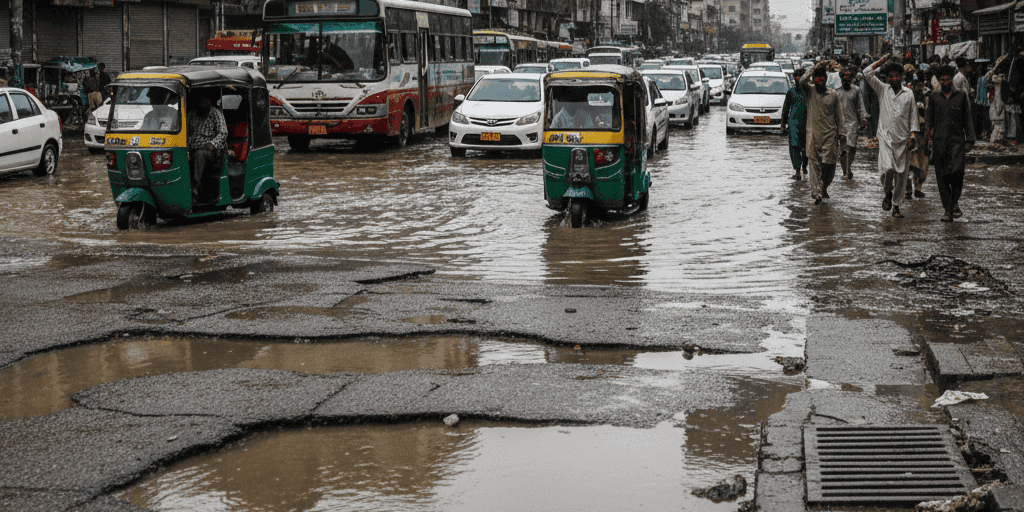
Despite repeated promises of improvement, road and drainage problems continue across Karachi. Every rainfall exposes the same old issues — broken streets, choked gutters, and damaged infrastructure. This report highlights how the city’s poor drainage system disrupts daily life and what officials are doing to fix it.
Persistent Flooding and Poor Infrastructure
In areas like Gulshan-e-Iqbal, Korangi, and North Karachi, road and drainage problems to frustrate residents. Roads that were recently repaired have cracked again after monsoon showers, exposing weak construction and poor maintenance.
According to officials, over 50% of Karachi’s drainage system remains clogged due to plastic waste and lack of timely cleaning. This is one of the major reasons road and drainage problems continue even after light rain.
Impact on Daily Life
The road and drainage problems cause serious inconvenience for citizens. Waterlogged streets make it hard for ambulances, school vans, and daily commuters to move safely. Shopkeepers in low-lying markets report that dirty rainwater often floods their shops, damaging goods and creating hygiene issues.
As road and drainage problems continue, traffic jams worsen. Drivers are forced to slow down on flooded or broken roads, while potholes cause frequent tire bursts and accidents.
Government Response
The Karachi Metropolitan Corporation (KMC) has admitted that road and drainage problems continue, blaming limited funds and weak coordination between departments. Repair work is ongoing in some areas like Saddar and Lyari, but progress remains slow.
The Sindh government has announced a new drainage improvement plan, yet residents remain skeptical. They say road and drainage problems continue because short-term fixes fail after every rainfall. Officials have also revealed that a new water management project, backed by the Asian Development Bank (ADB), will start next year.
Environmental and Health Concerns
Because road and drainage problems continue, stagnant water is now a breeding ground for mosquitoes, increasing dengue and malaria cases. Environmental experts warn that Karachi’s outdated drainage system — built decades ago — cannot handle a population of over 20 million.
Teams from the Sindh Solid Waste Management Board (SSWMB) are working to unclog drains, but residents believe long-term reforms are the only real solution. Until then, road and drainage problems will continue to threaten public health.
Conclusion
It is clear that road and drainage problems continue due to poor infrastructure, weak maintenance, and outdated planning. For a lasting solution, the government must invest in durable materials, modern drainage design, and transparent project monitoring.
Until these reforms are implemented, Karachi’s citizens will keep suffering every rainy season.